

Medically reviewed by Dr Sulaiman Shah, GMC No. 7038832 — The GP Clinic, 124 City Road, London.
Last updated: September 12, 2026
Quick answer: Most back pain is caused by muscle strain or poor posture and improves within a few weeks with simple home care and gentle movement. It rarely needs scans or imaging. See a GP if pain persists beyond 4 weeks, spreads down a leg, or comes with numbness, fever, or unexplained weight loss.
Back pain is one of the most common reasons people visit a GP, with around 80% of adults experiencing it at some point in their lives. The good news is that the vast majority of cases are mechanical — caused by strain, posture, or minor injury — and settle without needing imaging or specialist referral. The challenge is knowing which category your pain falls into, and whether an online consultation can actually help.
Understanding what’s normal, what’s worth watching, and what needs urgent attention is where our online GPs can help.

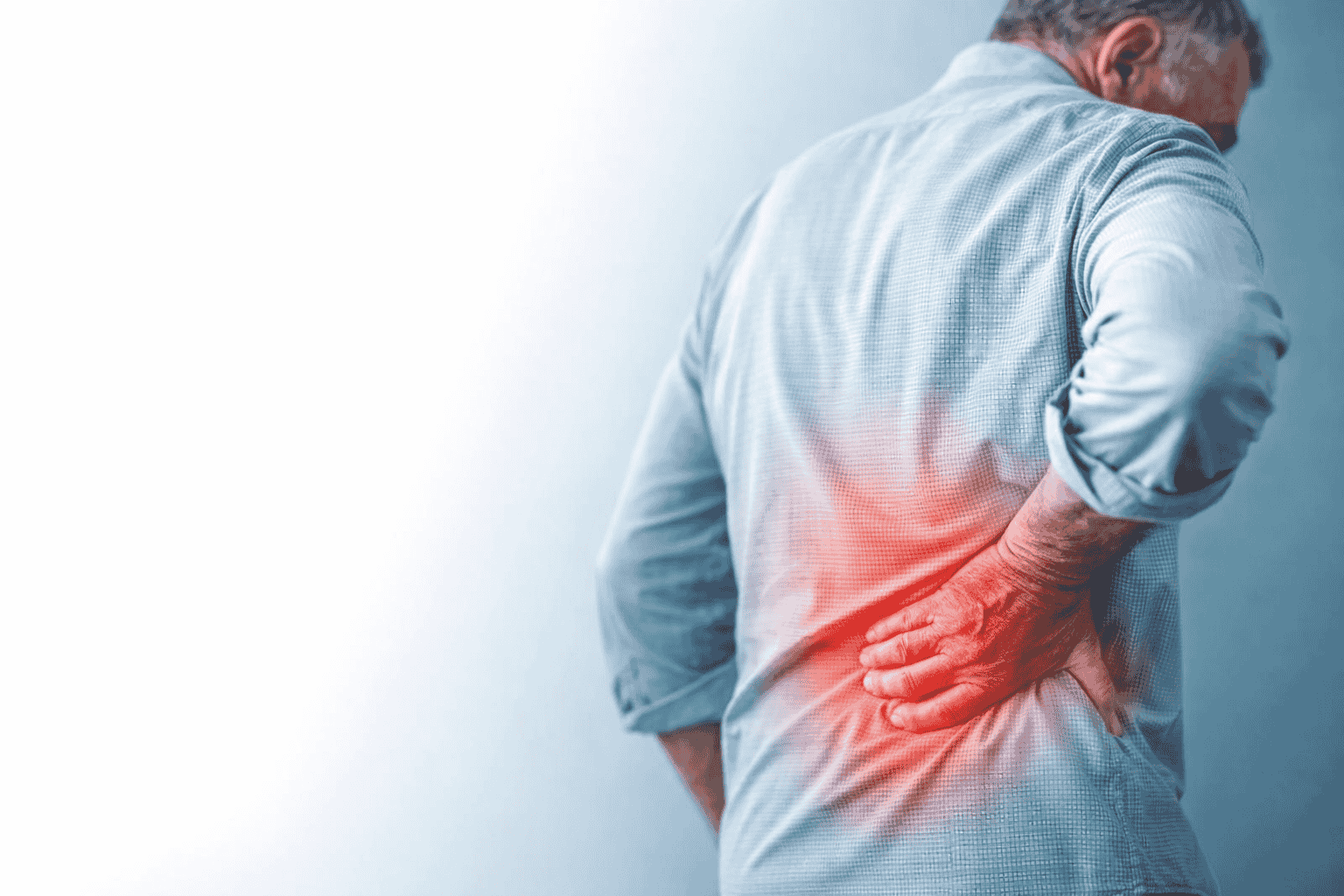
Back pain can present in different ways depending on the cause:
Back pain can come from several different sources, and knowing the pattern of your pain helps point toward the likely cause:
| Type | Key Distinguishing Signs |
|---|---|
| Mechanical back pain | Localised ache or stiffness, often linked to movement or posture, no radiating pain or numbness |
| Sciatica | Sharp, burning pain radiating down one leg, often with numbness or tingling, worse when sitting |
| Kidney-related pain | Pain higher up, toward the sides or under the ribs, often with fever, nausea, or changes in urination |
| Serious spinal causes (infection, tumour, fracture) | Persistent, worsening pain that doesn’t ease with rest, often worse at night, sometimes with fever or unexplained weight loss |
If the pain stays in your back and eases with rest and gentle movement, it’s most likely mechanical. If it radiates down a leg, think sciatica. If it’s higher up with fever or urinary changes, it could be kidney-related. Persistent pain that doesn’t improve with rest, especially with other symptoms, is worth having properly checked.
Sciatica gets mentioned constantly but rarely explained in a way that helps you recognise it in yourself. It happens when the sciatic nerve — which runs from your lower back, through your buttock, and down the back of your leg — becomes compressed or irritated, usually by a herniated disc.
Rather than pain staying in your back, sciatica typically causes a sharp, burning, or shooting pain that travels down one leg, sometimes reaching as far as the foot, often alongside numbness, tingling, or a feeling of weakness in the leg. It can range from a mild nuisance to genuinely debilitating, and while many cases improve with time and conservative treatment, persistent or worsening sciatica is worth having properly assessed.
Most back pain is not dangerous, but certain symptoms indicate something more serious may be going on and need prompt medical assessment:
If you notice the last symptom in particular, this needs immediate emergency attention — see below.
This is the single most important red flag to understand, and it’s rarely explained properly. Cauda equina syndrome occurs when the bundle of nerves at the base of the spinal cord becomes severely compressed, most often by a large herniated disc. Because these nerves control bladder, bowel, and leg function, severe compression can cause permanent nerve damage if not treated within hours, not days.
Seek emergency medical attention immediately (A&E, not a routine GP appointment) if you experience:
This is genuinely rare, but recognising it matters enormously, since fast treatment is directly linked to how much function can be preserved.
Rather than vague timeframes, here’s a practical way to think about it:
This is a genuinely common question, and the honest answer is: yes, for the majority of cases. Most back pain assessment relies on your symptoms, their pattern, and a detailed history — questions about how the pain started, what makes it better or worse, and whether you have any red-flag symptoms — which can be thoroughly and safely covered in an online consultation.
An online GP can advise on treatment, prescribe appropriate medication, issue a fit note if needed, and clearly identify if your symptoms suggest you need urgent in-person or emergency assessment instead. The main limitation is a hands-on physical examination, so if your GP feels this is essential based on what you describe, they’ll guide you toward in-person care rather than trying to manage everything remotely.
A GP will typically ask when your pain started, whether it followed a specific injury or came on gradually, what the pain feels like, and whether it’s affecting your legs, bladder, or bowel function. They’ll ask what makes it better or worse, and how it’s impacting your daily activities and work. Based on your answers, they’ll usually be able to identify whether you’re dealing with straightforward mechanical back pain or something that needs further investigation.
Imaging like X-rays or MRI scans are rarely needed for routine back pain — in fact, over 90% of acute low back pain cases improve completely without ever needing a scan — and are generally reserved for cases with red-flag symptoms or pain that isn’t improving as expected.
Book an online GP appointment if:
Seek emergency care immediately if you experience loss of bladder or bowel control, numbness in the saddle area, or severe weakness in both legs — these are signs of a spinal emergency.
Most back pain is genuinely manageable and improves with time, movement, and the right guidance — but knowing which category yours falls into brings real peace of mind. Our online GPs are available 7 days a week, and for the vast majority of back pain cases, a remote consultation is a genuinely appropriate and convenient first step.
If mild back pain hasn’t improved after about 4 weeks of home treatment, it’s worth booking a GP appointment. Pain with red-flag symptoms should be assessed sooner, regardless of how long you’ve had it.
Yes, for most cases. Back pain assessment relies heavily on your symptoms and history rather than a physical exam alone, so an online GP can advise on treatment, prescribe medication, and identify if in-person or emergency care is needed instead.
Usually not. The vast majority of back pain is caused by muscle strain or poor posture. Serious causes are rare, but red-flag symptoms like radiating pain, numbness, fever, or bladder changes should always be assessed.
Loss of bladder or bowel control, numbness around the inner thighs and buttocks, or severe weakness in both legs are signs of cauda equina syndrome and need immediate emergency care.
Usually not. Over 90% of acute low back pain improves without needing any imaging. Scans are generally reserved for cases with red-flag symptoms or pain that isn’t improving as expected.
Back pain stays localised to the back, while sciatica causes pain that radiates down one leg, often with numbness or tingling, due to pressure on the sciatic nerve.
No, prolonged bed rest can actually slow recovery. Gentle movement and staying as active as possible, within your comfort levels, generally leads to faster recovery.
Yes, prolonged poor posture, particularly during long periods of sitting or screen use, is one of the most common contributors to back pain.
Over-the-counter anti-inflammatories or paracetamol are generally safe first-line options. A GP can advise on prescription options if over-the-counter medication isn’t providing enough relief.
Occasionally, yes. Conditions affecting the kidneys or pelvic organs can sometimes cause pain that feels like it’s coming from the back, which is why a proper assessment matters if the cause isn’t clear.
Recurrent back pain is common, particularly if the underlying cause, such as posture or core strength, isn’t addressed. A GP can help identify contributing factors to reduce how often it recurs.
Yes, if your back pain is affecting your ability to work, an online GP can issue a fit note as part of your consultation.




Simple. Fast. Efficient. We have streamlined the process.