Medically reviewed by Dr Sulaiman Shah, MBChB, BMedSci, MRCGP, General Practitioner and Founder, The GP Clinic (GMC No. 7038832)
Last reviewed: October 2026
Liver disease is any condition that damages the liver or stops it working properly. In the UK, the most common causes are fatty liver (now called MASLD), alcohol, and viral hepatitis. The key point is that liver disease often causes no symptoms until it is advanced, so damage can be well under way before anyone notices. The good news is that, caught early, much of it can be slowed or even reversed.
This guide covers the types and causes, the stages, the symptoms to watch for, how liver disease is diagnosed in the UK, treatment, and practical ways to look after your liver.
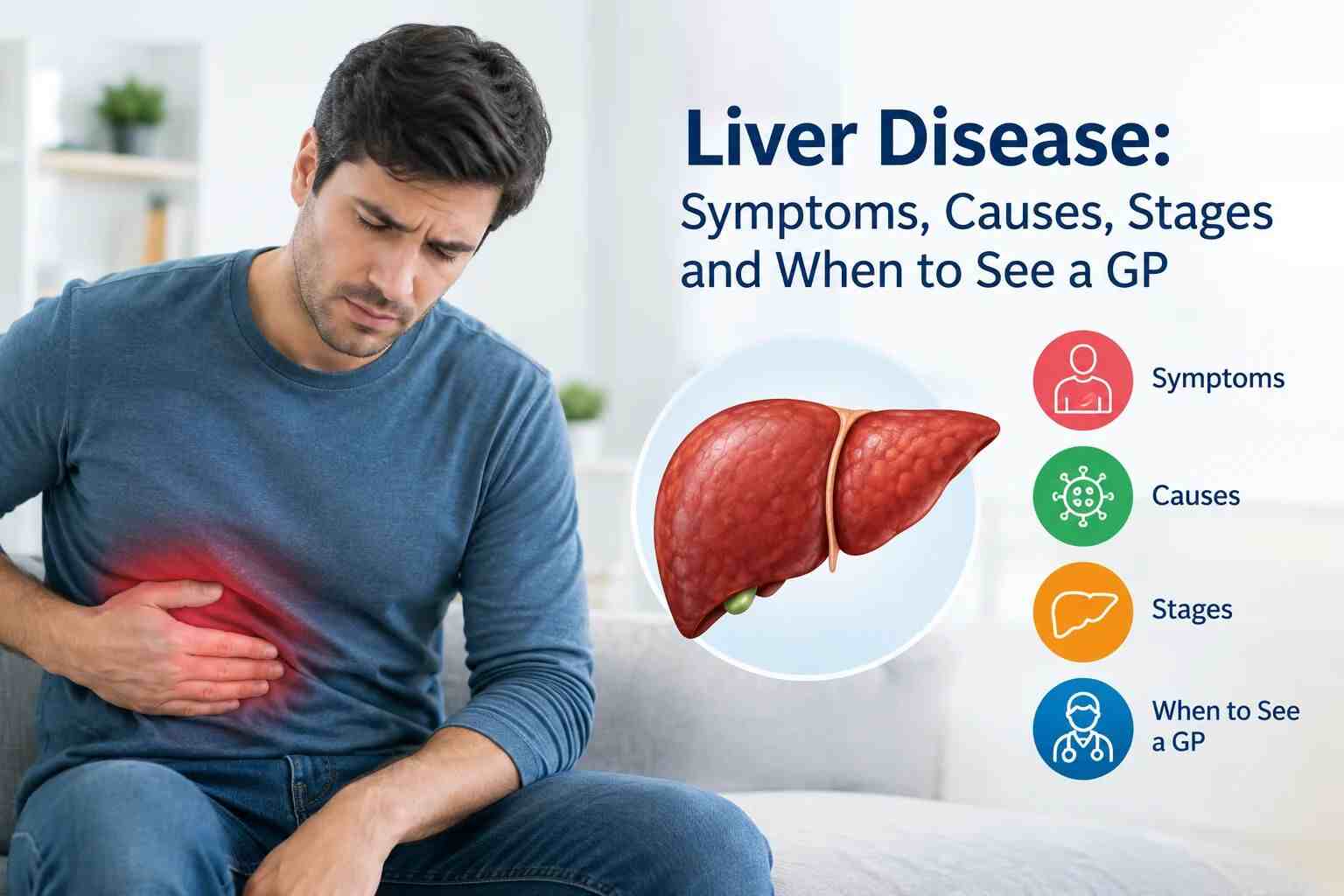
Your liver is about the size of a rugby ball and sits under your right ribs. It filters your blood, breaks down medicines and alcohol, makes bile to digest fat, stores energy, and produces proteins that help your blood clot. It is also unusually good at repairing itself, which is why damage can be silent for so long: the liver compensates until it can’t.
Liver disease isn’t one illness. It is a group of conditions with different causes but a similar pattern: inflammation, then scarring, then loss of function.
Fatty liver is the most common liver condition in the UK. It used to be called non-alcoholic fatty liver disease (NAFLD). Since 2023 the preferred term is metabolic dysfunction-associated steatotic liver disease (MASLD), though you will still see both names. It means excess fat is stored in the liver, and it is strongly linked to:
The NHS estimates that around one in three UK adults may have early-stage fatty liver, and most don’t know. Most people never develop serious damage. A minority develop inflammation (MASH), which can lead to scarring.
Example: A 52-year-old man with type 2 diabetes and a BMI of 33 has a routine blood test and his ALT (a liver enzyme) is mildly raised. He doesn’t drink heavily and feels fine. This is a classic MASLD presentation, and the reason people with diabetes should have their liver risk checked.
Alcohol is processed by the liver, and too much of it injures liver cells. It progresses through fatty liver, alcohol-related hepatitis, and cirrhosis. The NHS advises not regularly drinking more than 14 units a week, spread over three or more days. For reference:
So 14 units is only around six pints or six medium glasses of wine. Many people who think of themselves as moderate drinkers are over this without realising.
A point often missed: alcohol-related fatty liver can appear within days of heavy drinking, and it often improves within weeks of stopping. That is a real opportunity to reverse the damage.
Hepatitis means inflammation of the liver, and several viruses can cause it:
Understanding the stages explains why early action matters.
The aim of every early test and lifestyle change is to stop someone moving from stage 2 to stage 3.
The liver itself has few pain nerves, so pain is not a reliable warning sign. Many people with significant liver damage have none.
Call 999 or go to A&E if someone with liver disease:
See a GP promptly, or use NHS 111, if you notice jaundice, even if you feel otherwise well.
You are at higher risk if you:
Risk also stacks. Someone with obesity who also drinks moderately has a much higher risk than either factor alone suggests.
Diagnosis normally starts with a conversation and a blood test.
1. Your history. Your GP will ask about alcohol, medicines, supplements, family history, and risk factors for viral hepatitis.
2. Liver function tests (LFTs). This blood test measures enzymes and proteins such as ALT, AST, ALP, GGT, bilirubin, and albumin. A raised result is a signal to look further.
3. A fibrosis check. The key question is not just “is there fat or inflammation?” but “is there significant scarring?” GPs often use a simple calculation called FIB-4, which uses age, blood test results, and platelet count. If it suggests a higher risk, you may be referred for a more specific blood test (such as the ELF test) or a FibroScan, a painless scan that measures liver stiffness.
4. Imaging and further tests. An ultrasound can show fat, structural changes, or other problems. Specific blood tests can identify hepatitis viruses, autoimmune markers, or iron overload. A liver biopsy is now needed only in a minority of cases.
A common misconception: normal liver blood tests do not always mean a healthy liver. Some people with cirrhosis have normal LFTs. That is why doctors look at risk factors and fibrosis scores, not just enzyme levels.
Also worth knowing: mildly raised bilirubin on its own can be Gilbert’s syndrome, a harmless and common inherited variation. Don’t assume the worst, but do get it checked.
Treatment depends on the cause.
Liver disease is common, often silent, and much more treatable when found early. The most important points to remember:
Your next steps: Check your weekly alcohol units honestly. If you have diabetes, a larger waistline, or a history of hepatitis risk, speak to a GP about a liver check. If you notice yellowing of the skin or eyes, dark urine, or persistent itching, arrange an appointment promptly. If you are worried about your drinking, support is available through your GP and local alcohol services.
Early stages, such as fatty liver and mild scarring, can often be reversed or improved once the cause is addressed. Cirrhosis generally cannot be reversed, but progression can often be stopped and many people live well for years.
Often there are none. When present, early signs are usually tiredness, poor appetite, nausea, or mild discomfort under the right ribs. Jaundice, itching, and swelling are later signs.
It varies enormously. Many people with fatty liver or compensated cirrhosis live for many years, especially when the cause is treated. Outlook depends on the type of disease, the stage when diagnosed, and whether complications develop.
No. Most people with simple fatty liver do not progress to cirrhosis. The risk is higher with inflammation, type 2 diabetes, and obesity, which is why a fibrosis check is useful.
Yes. Fatty liver, viral hepatitis, autoimmune disease, inherited conditions, and medicines can all cause liver disease in people who rarely or never drink.
Not always. They can be normal in people with significant scarring. Doctors combine them with risk factors, a fibrosis score, and sometimes a scan.
Only the viral types (hepatitis A, B, C, and E) are infectious. Fatty liver, alcohol-related, and autoimmune liver disease are not.
There is no routine screening for everyone. If you have diabetes, obesity, drink above guideline levels, or have a risk factor for hepatitis, ask your GP whether a liver check is appropriate for you.
Dr Sulaiman Shah is a UK-trained GP and the founder of The GP Clinic. He graduated from the University of Birmingham Medical School in 2009, is a Member of the Royal College of General Practitioners (2016), and holds a Diploma of the Royal College of Obstetricians and Gynaecologists. He has almost a decade of experience across NHS and private general practice. Read his full profile.
This article is for general information and does not replace personal medical advice. If you are concerned about your liver health, speak to a GP or call NHS 111. In an emergency, call 999.